
Twenty years in — and a lot to show for it.
Healthcare, security, privacy, food — concept to production to scale, and the long tail of maintenance most engineers never stick around for. Here's the track record, the toolkit, and how I actually work.
Where I've been
2025 — nowStaff Engineer · DevOps, CI/CD, production reliabilityLeasecake⌄
- Lead DevOps: CI/CD pipeline optimization and deployment automation.
- Primary owner of production debugging and reliability across the full stack.
2021 — 2024Staff Engineer · flagship Vue app, zero-knowledge E2E authCloaked⌄
- Led the flagship client-facing application, built in Vue.
- Major contributor to a zero-knowledge, end-to-end encrypted authentication system.
- Part of engineering leadership driving roadmap and product requirements.
2020 — 2021Senior Engineer · native→React/Electron migration, lead + UXStealthBits⌄
- Led migration of a legacy Windows app to React/Electron as lead developer and UX designer.
- Moved the team from waterfall to modern, product-led agile.
2017 — 2020Lead Senior Engineer · founding team, food-as-medicine platformTangelo⌄
- Founding team member; built a food-as-medicine platform from concept.
- Built enterprise order-management, inventory, and CRM systems.
2010 — 2017Senior Engineer · HIPAA platform, 10M+ monthly users, ETLVitals⌄
- Lead engineer of a public site serving 10M+ unique users/month on HIPAA-compliant AWS.
- Drove adoption of Laravel, Elasticsearch, Solr, and MongoDB.
- Built ETL pipelines processing millions of healthcare datapoints daily.
2005 — 2009Developer · sole developer, ad agencyEgo Id⌄
- Sole developer at an advertising agency; full-stack web across many client projects.
What I'm good at — years, and how deep
Core
Frontend & mobile
Data
Working with AI
…and how I work with it all
Everyone says they "use AI." The real question is whether they know when it's wrong. I treat it like any sharp tool — clear goals, hard constraints, judgment. Twenty years tells me where the model is confidently mistaken; architecture and tradeoffs still come from experience.
Specs before code
BDD specs first. The model executes; the thinking behind the spec — and the call on whether it's right — stays mine.
Claude Code, every day
Primary tooling, not a party trick. Multi-model orchestration where it earns its keep, plain old typing where it doesn't.
Small, honest pieces
Actions-pattern architecture — single-purpose units a model can extend without a human losing the plot.
Things I've built, completely solo, end to end.
the one I'm proudest of right now ↓
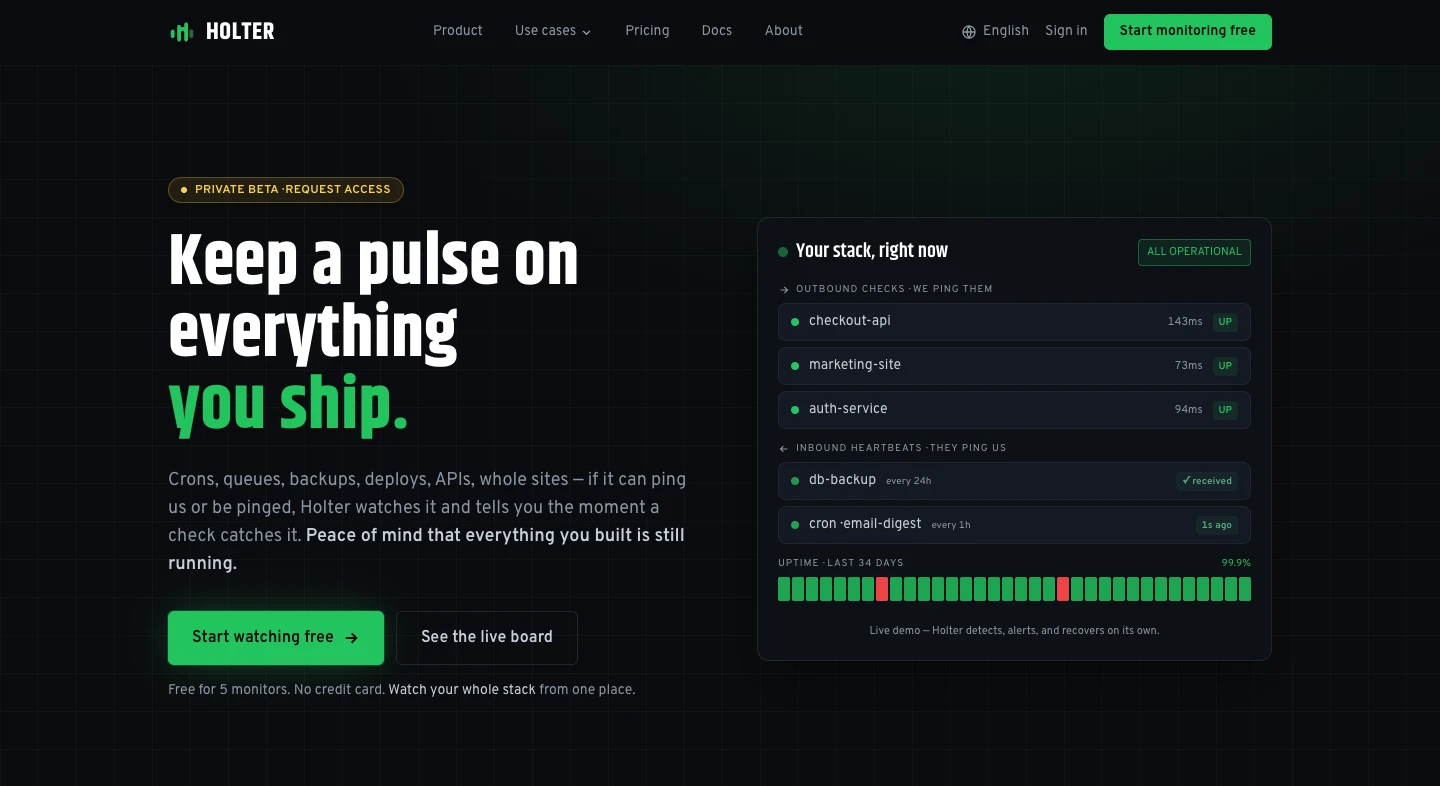 Holter — holter.sh
Built for silent failures.
Every product has a cron or queue quietly holding the business together — and those only ever fail silently. Holter watches from the outside, the way your users reach you — no server agents, no credentials, no SDK — and scheduled jobs prove they ran by pinging in.
The alert is the product
Quiet when things are fine, loud when they are not. Everything else exists to make that alert fast, accurate, and pointed at the right person.
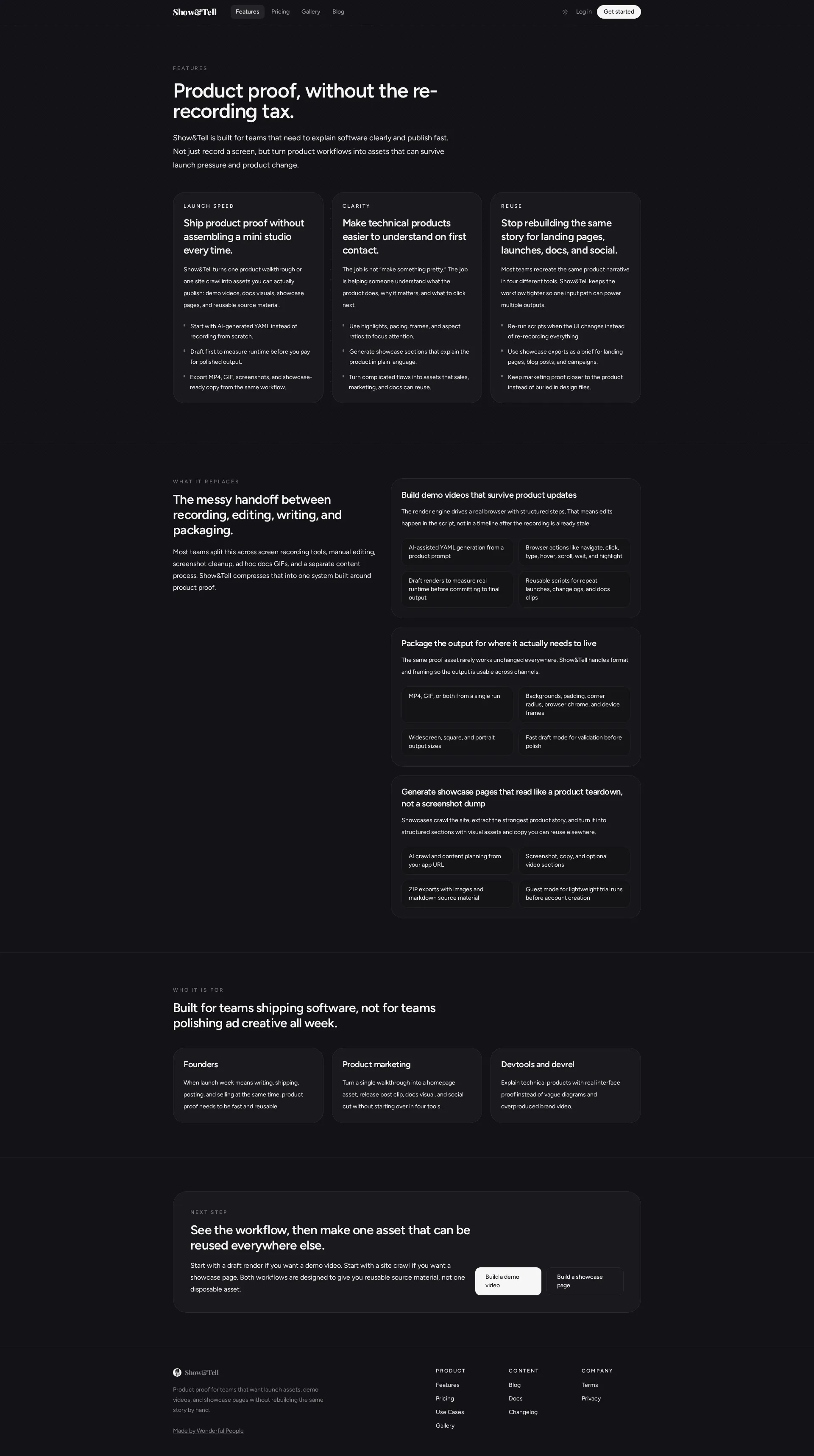 ↗
↗ShowTell
liveDemo videos from scripts, showcase pages from URLs. AI compressing workflow, not replacing taste.
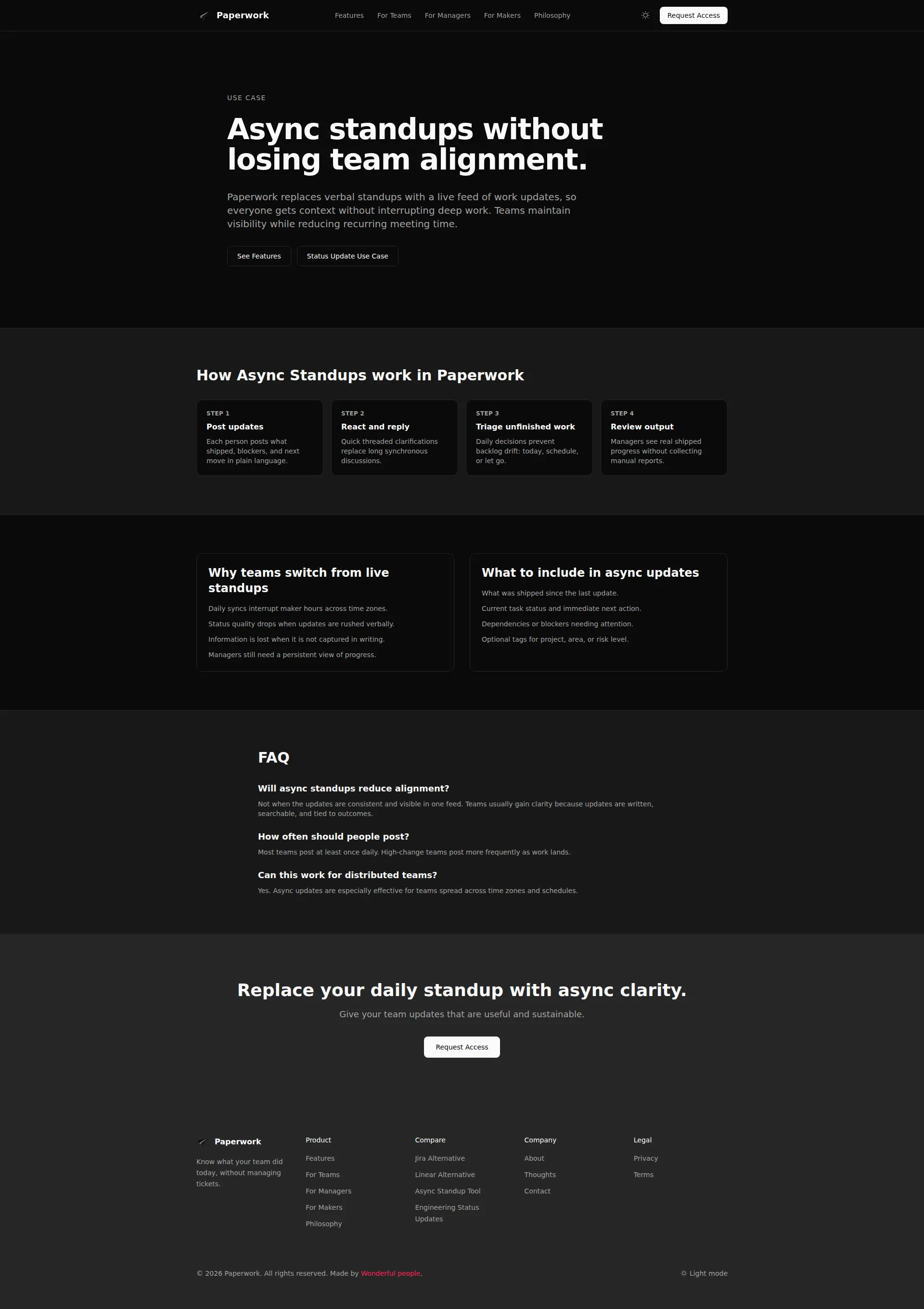 ↗
↗Paperwork
case studyThe anti-project-management tool. Tickets and standups replaced by a feed of what actually shipped.
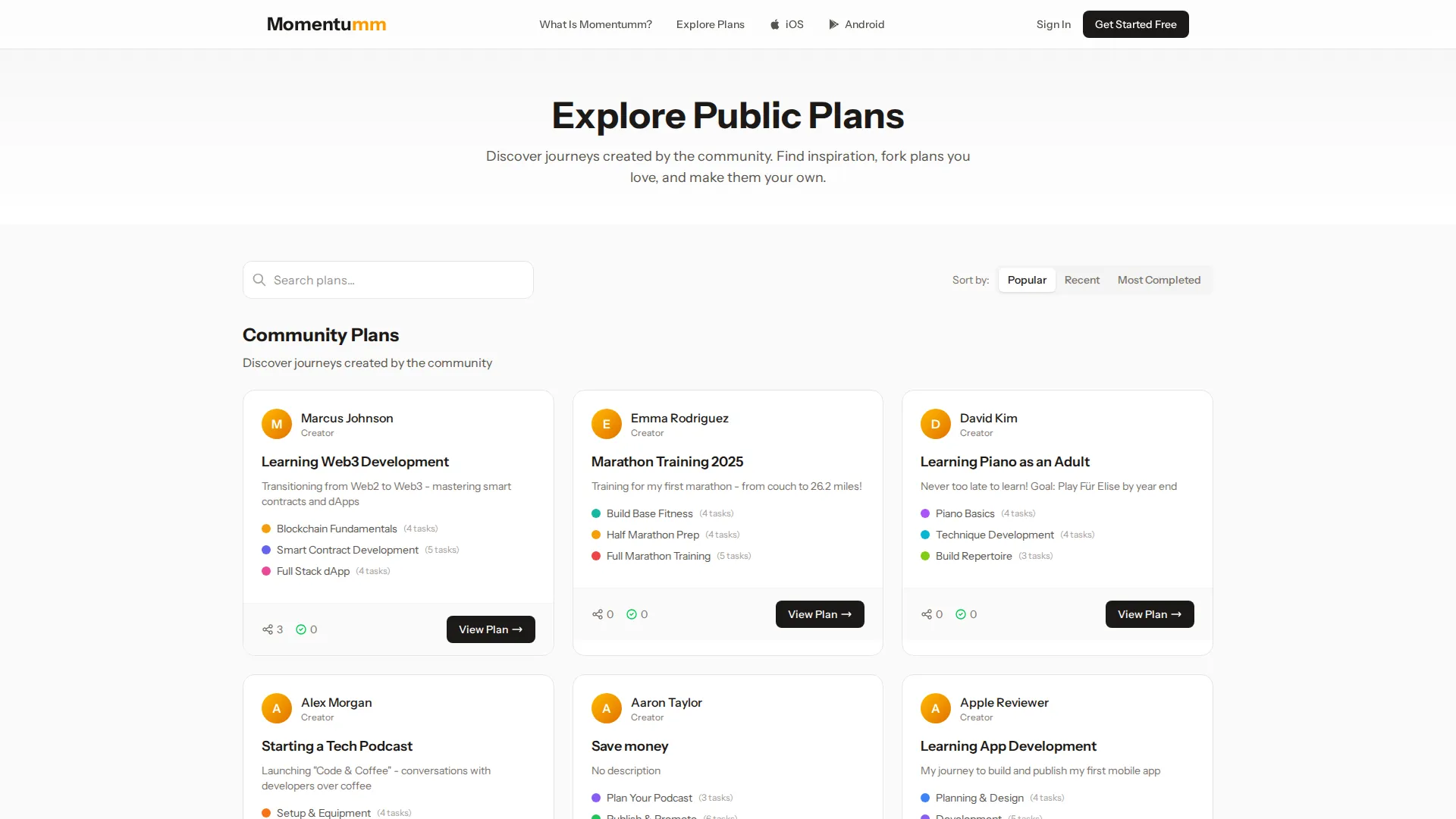 ↗
↗Momentumm
case studyGitHub for personal goals — public plans, shared progress, calm community mechanics.
$ composer require
wonderful/wonder-ab↗WonderAB
open sourceA/B testing — Blade directives, weighted variants, nested experiments, pluggable analytics.
Notes from the bench — writing, half-thoughts, things I post.
Essays when an idea earns the long form, short posts when it doesn't. The decision is usually the story; the code is just evidence.
Random thought Tuesday: Obsession was just this generations version of Bedazzled https://t.co/Atd6OVsjt6
AI has supercharged the snake oil and tonic age. If you want to stand out, provide real value.
I spent my 20's and 30's, and early 40's gaining experience in building and shipping products. Knowing how many weekends, side projects, reading, researching I've done to be able to build anything I want with software. How I feel, nearing 45, knowing that my future is https://t.co/anraWz7oDk
I'm not just vibe coding, i'm vibe living
The moat is experiencing meaningful pain at scale
Who is the internet even for anymore?
It’s no surprise that with the rise of agentic coding and the collapse of any barrier to entry or risk to spinning up apps, that people would be flooding the market with insurmountable...
Guys, I'm all for AI, but all the "Let AI generate 100 social media/blog posts" apps are helping kill internet content. I understand we're basically in a prisoners dilemma, but the internet will be just agents talking to each other by 2027, questioning why even bother at that
The death of the introverted developer
I’m starting to give up trying to become an entrepreneur because I’m tired of making the same mistakes over and over.Thanks for reading Rules! Subscribe for free to receive new p...
You marry the software you write.
We will value each other again... someday.But right now, web development - especially SaaS builders - are undergoing a midlife crisis right now. As AI made coding trivial, and enabled people...
Why BugJar records nothing by default
Every session-replay tool starts recording on page load and asks forgiveness later. I inverted it: BugJar captures nothing until the user reproduces the bug and explicitly consents to send it. The elevated consent session — one-time, browser-side redaction so sensitive data never reaches a server — was the hard part, and the part worth building.
Tools, Fools and AI: Why building with moral purpose might be the way forward.
TLDR: This very long post is about why I build BugJar. A tool built out of moral needs instead of technical one. Now on with the post..I wanted to start this article by saying that most user...
Everyone is building with AI but nobody's actually selling anything.
Many of you making apps with AI are hitting a wall many of us devs often find insurmountable.You have an idea, and you quickly buy a domain, and use claude code to spin up a working app, you...
AI isn't replacing developers. It's replacing the industry, and that's far worse.
caption...I am not an AI doomer. While AI has created a higher hurdle for junior developers seeking employment, but it’s been a net good for software engineers productivity and capacit...
↳ find me on X & LinkedIn